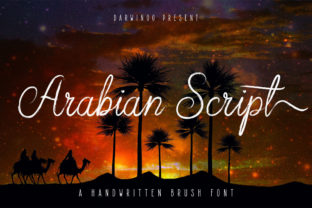
Arabian Script Font: Elevating Small Business Branding
Last Tuesday, I sat at my desk surrounded by three different label proofs for a new line of organic honey jars. The product was perfect, the photography was warm and inviting, but something felt off. The packaging looked generic. It lacked that specific, tactile warmth that tells a customer, "This was made with intention." As a creative consultant working with small artisans, I see this hurdle constantly. We often have premium products wrapped in discount typography. That afternoon, I decided to test the Arabian Script typeface on the mockups, and the shift in brand perception was immediate.
Finding the right script font is a delicate balancing act for business owners. You want elegance without illegibility, and personality without chaos. Arabian Script sits in a unique sweet spot within the Script Amp category. It is not a flimsy, overly ornate calligraphy that disappears when printed small, nor is it a heavy, aggressive marker style. Instead, it offers a semi-bold weight with a textured shape that feels grounded and authentic. When applied to those honey labels, the texture mimicked the natural grain of the paper stock we had chosen, creating a cohesive visual experience that instantly elevated the perceived value of the product.
Why Texture Matters in Product Packaging
In digital design, we often obsess over clean vectors and sharp lines. However, in physical branding—especially for handmade goods, bakeries, or boutique skincare—perfection can sometimes feel sterile. The defining characteristic of Arabian Script is its subtle texture. This isn't a grunge effect layered on top; it is baked into the letterforms themselves. For a small business owner, this detail does heavy lifting.
When I used this font for a client’s candle jar redesign, the textured edges of the letters interacted beautifully with the matte finish of the label. It created a sense of heritage and craftsmanship that a standard sans serif font simply could not convey. If you are selling products where "handmade" or "artisanal" is a key selling point, your typography needs to reflect that human touch. Arabian Script provides that organic quality while maintaining enough structure to remain professional. It signals to the customer that the brand pays attention to details, which subconsciously suggests the product inside is equally well-crafted.
Practical Applications Across Brand Touchpoints
A versatile display font needs to work harder than just looking pretty on a mood board. It has to function across the entire ecosystem of your business. Based on my testing and implementation with various clients, here is where Arabian Script performs best:
- Product Labels and Tags: The semi-bold weight ensures the text holds up against colored backgrounds or textured papers. It is ideal for short product names like "Lavender Mist," "Sourdough Loaf," or "Silk Scarf."
- Wedding and Event Stationery: For invitation suites, this typeface adds a romantic yet modern flair. It works exceptionally well for couple names or venue headers where you need impact without excessive swashes that crowd the layout.
- Social Media Graphics: On Instagram thumbnails or Pinterest pins, readability at small sizes is critical. Because Arabian Script avoids hairline thin strokes, it remains legible even when scaled down for mobile screens.
- Thank-You Cards and Inserts: Using this font for headers on package inserts creates a consistent unboxing experience. It ties the digital storefront aesthetic to the physical product the customer receives.
- Logo Design and Wordmarks: While it may be too decorative for long company names, it serves as a stunning accent word in a logo lockup. Pairing it with a simpler primary logotype can create a memorable brand hierarchy.
Mastering Font Pairings for Professional Layouts
One of the most common mistakes I see in DIY branding is letting a script font dominate the entire design. Arabian Script is a star performer, but it needs a supporting cast to shine. To maintain readability and a polished commercial look, treat this typeface as an accent rather than a body text solution.
For a luxury skincare brand project, we paired Arabian Script with a clean, geometric sans serif font. The contrast between the textured, flowing script and the rigid, modern sans serif created a dynamic tension that felt high-end and trustworthy. The script handled the emotional connection (product names, taglines), while the sans serif handled the functional information (ingredients, usage instructions, pricing).
If your brand leans more traditional or vintage, consider pairing Arabian Script with a classic serif font. This combination works wonders for cafés, bookshops, or heritage-style clothing brands. The key is spacing. Give the script room to breathe. Crowding elegant letterforms makes them look cheap. Ample whitespace around the Arabian Script headlines allows the textured details to be appreciated and improves overall layout clarity.
Readability and Commercial Licensing Considerations
Before you commit to any creative font for business use, you must address two practical realities: legibility and licensing. During a recent menu refresh for a local bistro, we loved the vibe of Arabian Script but had to be strategic about placement. We used it strictly for section headers like "Desserts" and "Cocktails." For the actual dish descriptions and prices, we switched to a highly readable serif. This ensured that while the menu looked beautiful, customers weren't squinting to read the specials.
Always verify the commercial license before printing. Fonts found in the Script Amp category or similar marketplaces often have different tiers for personal versus commercial use. If you plan to use Arabian Script on merchandise for sale, product packaging, or client work, ensure you have the appropriate commercial license. This protects your business legally and supports the type designer who created the asset.
Additionally, check the included file formats and features. OpenType features like ligatures and alternates can transform a good design into a great one. Arabian Script includes stylistic alternatives that allow you to customize connections between letters, preventing repetitive patterns in longer phrases. Taking ten minutes to explore these glyphs in your design software can make your branding look custom-lettered rather than typed.
The ROI of Intentional Typography
Typography is often the silent ambassador of your brand. In my experience consulting for small businesses, upgrading from a free, overused font to a premium, character-rich typeface like Arabian Script yields tangible results. It reduces the cognitive load for customers trying to understand what you sell. It builds trust through visual consistency. It makes your packaging shelf-ready and your social media scroll-stopping.
That honey label project? After switching to Arabian Script and adjusting the layout to accommodate its semi-bold texture, the client reported that customers were picking up the jars more frequently at markets. They weren't commenting on the font specifically; they were commenting on how "nice" and "premium" the product felt. That is the power of intentional design. Whether you are refreshing a bakery box, designing a boutique tag, or updating your online shop banner, choosing a typeface with personality and purpose is one of the most cost-effective investments you can make in your brand identity.